Elaine Mason is often reduced to a single line in Stephen Hawking’s biography: “his second wife.” Yet her life before, during and after that marriage remains largely absent from popular accounts. A trained nurse, she shared the daily life of one of the 20th century’s most famous physicists for more than a decade, in a setting where medical care and married life became intertwined.
Hawking’s speech synthesizer: an unexpected family connection
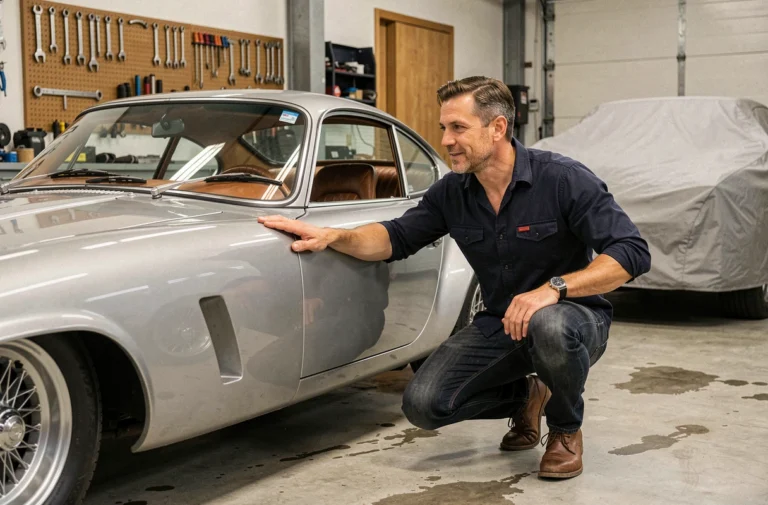
The speech synthesizer that enabled Stephen Hawking to communicate was installed and adapted on his wheelchair with the help of David Mason, Elaine’s first husband. This technical detail places Elaine and Stephen’s meeting in a very concrete context.
Elaine also cared for the physicist, working as a home nurse in Cambridge in the late 1980s. The two Masons were therefore both connected to Hawking, albeit for different professional reasons.
The romantic relationship between Elaine and Stephen developed amid this daily care, where medical support and personal closeness can easily become intertwined. To learn more about Elaine Mason and her life, it is worth revisiting the period when her professional and private lives changed at the same time.
Marriage to Stephen Hawking in Cambridge: a timeline of a controversial union
On September 16, 1995, Stephen Hawking and Elaine Mason married in Cambridge. It was his second marriage, following his separation from Jane Wilde, the mother of his three children. Elaine, for her part, was leaving David Mason.
Their marriage lasted eleven years, from 1995 to 2006. During that time, Elaine held an unusual position: she was both the wife and caregiver of a man almost completely paralyzed by amyotrophic lateral sclerosis.
This dual role led to lasting tensions. Hawking’s children from his first marriage gradually became more distant. Former members of his care team described the scientist as becoming increasingly isolated over the years.
A divorce finalized in 2006
The couple divorced, citing the irretrievable breakdown of the marriage. No detailed public statement accompanied their separation. Hawking later reconnected with his first wife and children, a reconciliation documented by several press reports.
Abuse allegations: what the investigation actually established
Allegations of abuse are the most widely publicized aspect of Elaine Mason’s story. Press reports have often presented the suspicions without clarifying how the investigation concluded. Here is what can be pieced together from the available sources.
- Cambridgeshire Police investigated reports of possible abuse against Stephen Hawking.
- Hawking himself described the allegations as “completely false” and refused to press charges. The investigation ended for lack of evidence and because the alleged victim did not cooperate.
- In October 2006, after the divorce, a former nurse spoke to the Daily Mail, describing an atmosphere of tension but providing no additional material evidence.
Police found no evidence proving that abuse had taken place. This finding does not settle the moral debate. It should be included in any rigorous account of this period, because presenting the allegations without mentioning the outcome of the investigation amounts to putting someone on trial without a verdict.
Elaine Mason after the divorce: a life away from the spotlight
After 2006, Elaine Mason left the public eye. No interviews or public statements by her are known from the years that followed.
This silence contrasts with Jane Wilde’s path. Hawking’s first wife, a scholar of medieval Spanish poetry, had an academic career and a university network in Cambridge that gave her an independent public profile. Elaine, a nurse by profession, had no media platform or editorial reason to speak out. The abuse allegations also left a lasting mark on her reputation, making any public statement risky.
Elaine Mason has never publicly responded to the allegations. Whether this was due to legal caution or a desire to move on, the choice has fixed her image in place: an ambiguous figure, neither defended nor condemned.
What the 2014 film leaves out
James Marsh’s film, The Theory of Everything, ends before Elaine’s marriage to Hawking. The story focuses on his relationship with Jane Wilde and concludes with their separation. Elaine Mason appears only in passing, further erasing her story from the collective memory.
Elaine Mason’s story raises a question that Hawking’s fame makes difficult to consider objectively: how do you tell the story of a caregiver who became a spouse when the patient is a world-renowned scientist? The available sources do not make it possible to choose between the different accounts. What remains are verifiable facts, a closed investigation and a silence that has lasted nearly twenty years.