
The gap between educational expectations and family reality is widening, regardless of social background or level of education. Some families, despite their commitment, face difficulties due to the multitude of conflicting models and advice. Parental support systems, although widely recommended, remain underutilized or unknown.
The long-term effects of appropriate support directly influence children’s academic success, emotional well-being, and autonomy. Yet, access to reliable resources and the integration of advice into daily life remain unequal. Guidelines to effectively support parents are more necessary than ever.
Parental support: why is it so essential today?
Positive parenting has emerged as a structuring approach, far from mere passing trends. Faced with an avalanche of contradictory educational models and growing isolation, many parents find themselves searching for their path, sometimes feeling disoriented. Parental support then takes on a new dimension: it becomes a valuable compass to prevent burnout, nurture confidence, and strengthen parenting skills.
The child’s development relies on the richness of family ties and the social environment. In this context, parental support acts as a protective net, providing guidelines and strategies to families while promoting listening. Support networks, professionals, and systems such as Caf in France open doors to educational success and academic achievement. Parents seeking reliable solutions thus find ways to meet their children’s specific needs, whether it involves overcoming behavioral difficulties or supporting their education.
Specifically, discovering the Parent Ultime site provides access to tools, analyses, and advice based on research and field experience. This resource helps families better understand the current stakes of parent-child support, while valuing dialogue with education professionals. When families and stakeholders work hand in hand, balance is restored, and each parent gains confidence to face the demands of contemporary education.
What challenges do parents face in raising their children?
The family often finds itself confronted with a multitude of tensions. As soon as children’s schooling comes into play, expectations become more pressing, demands multiply, and exchanges with schools sometimes become sources of tension. Educational strategies are then built on a tightrope, between personal aspirations and collective constraints. Parent-school communication takes a central place but is often limited to formal exchanges, while a genuine alliance is crucial for student success.
Behavioral issues, managing disabilities, or choices related to educational orientation require adults to demonstrate listening and flexibility. Between maternal and child protection and national education, support exists, but personalized assistance is still lacking. Parents juggle between the desire to support, to guide, and to let their children grow: a fragile balance, often tested in fragmented paths where individual help is rare and institutional responses too standardized.
To better understand the concrete difficulties encountered, here are the main challenges that arise:
- Identify the specific needs of each child;
- Cope with the demands of school;
- Articulate the role of professionals;
- Accept the areas of uncertainty inherent in each journey.
In daily life, parents reinvent their role, balancing unwavering support and the search for reliable guidelines. Difficulties often manifest quietly: fatigue, discouragement, feelings of isolation. Despite the presence of support structures, the gap remains wide. Families expect more than just occasional help: they want to be heard, recognized, and actively participate in co-construction with educational actors.
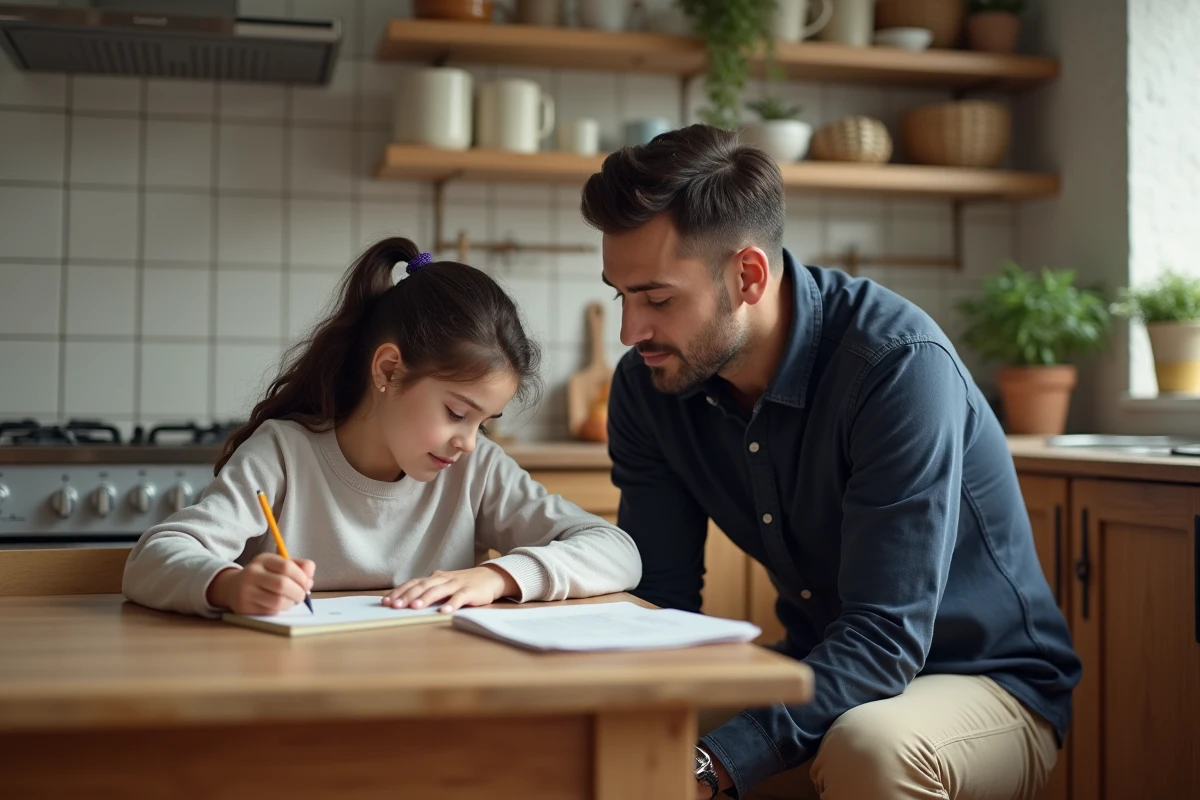
Concrete advice to support and enhance parental involvement in daily life
Strengthening parental guidance always starts with sincere listening to the needs of each family. Encourage non-violent communication in exchanges with children: name emotions, welcome feelings, avoid judgment. A coherent framework at home nurtures confidence and encourages autonomy, a cornerstone of development.
To maintain parental involvement, regular meetings with the educational community make all the difference. Too often overlooked, these moments of dialogue allow for sharing solutions, anticipating obstacles, and strengthening cooperation between family and school. Participating in educational team meetings or visiting parent-child spaces creates an environment where everyone feels heard and supported.
Here are some concrete avenues to explore to support this journey:
- Experiment with the Barkley method to support children with behavioral issues.
- Participate in workshops or support groups to mobilize your parental resources.
- Deepen soft skills: appreciation, listening, conflict management.
Parental support systems, along with listening, support, and assistance networks (REAAP networks) or local support contracts, provide reliable resources for those who feel the need. It is essential to widely disseminate information about these resources so that every family can find the support suited to their reality.
Highlighting parental engagement means recognizing the value of exchange, constant adjustments, and respecting each child’s unique pace. It also serves as a reminder that behind every success, there is a collective adventure, made of trial and error, progress, and creativity. Who knows what our children will remember tomorrow from these shared steps?