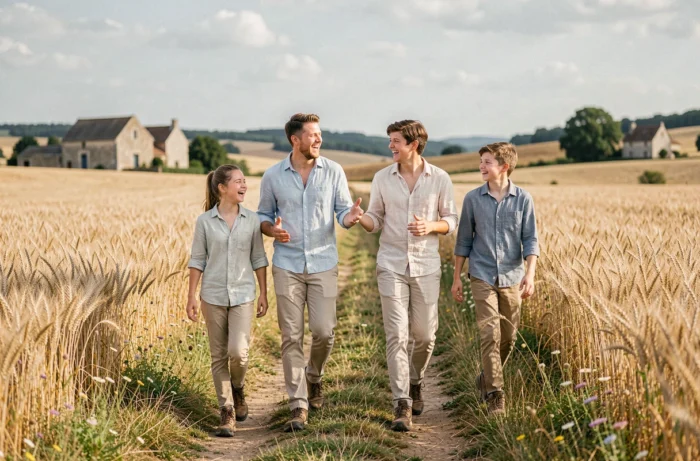
Family activities in the countryside are about more than ticking items off a list. A study published in the journal Ambio in 2026, conducted in the Grenoble area, found that a lack of high-quality natural spaces, limited free time and overcrowding are among the practical barriers to spending time outdoors.
Women, people on low incomes and people with reduced mobility report more barriers. Choosing where to go, when to visit and which route to take matters just as much as choosing the activity itself.
Family nature outings: choose a site without adding to overcrowding
Some protected areas now monitor visitor numbers to manage tourist flows. For families, this changes the equation: the trails most widely shared on social media are not necessarily the most enjoyable to explore with young children.
Choosing a less crowded route also means respecting areas where wildlife and plants need peace and quiet. National parks mark out these areas, and IGN maps often show secondary paths that offer a quieter walk than a busy GR trail during peak season.
Checking forest access conditions before setting out can help avoid unpleasant surprises. Falling branches, forestry work or the presence of processionary caterpillars can make a path impassable or dangerous. Prefectural orders sometimes set out monitoring and public information measures in the event of a health risk. Marked trails are the safest choice with children. Platforms such as https://loisiragri.fr list rural and agricultural activities that offer a way to discover the countryside away from overcrowded trails.
Foraging in the countryside: rules to know before you pick
Picking blackberries or mushrooms may seem like the quintessential family activity. The legal reality is more nuanced. Foraging rules vary depending on the location, species and local regulations. Some plants are protected, and picking wildflowers in a nature reserve may constitute an offence.
On private land, you need the owner’s permission. In state-owned forests, picking fruit and common mushrooms for personal use is generally tolerated, but quantity limits often apply.
- Check whether the site is in a protected area (nature reserve, biotope protection order or national park) before planning to forage
- Ask the landowner for permission if the land is private, even if you only want to pick a few handfuls of chestnuts
- Check municipal or prefectural orders, which may prohibit picking certain species locally
- Only gather what your family will eat, leaving enough for wildlife and natural regeneration
Teaching children these rules is part of the activity. Identifying a protected species and explaining why it must not be picked is just as valuable as a nature lesson.
Pick-your-own farms: a regulated alternative
Farms offering pick-your-own produce (strawberries, raspberries and apples, depending on the season) provide a setting where there are no questions about legality. The grower sets the rules, provides containers and indicates which rows are open. For families with young children, this is often more suitable than wild foraging, which requires a good knowledge of plants.
Nature activities for all ages: beyond hiking
A walk in the woods is still the most common family outing. It works, as long as you don’t expect four-year-olds to keep an adult’s pace. There are several alternatives to consider when a traditional hike gets boring or leaves the youngest children out.
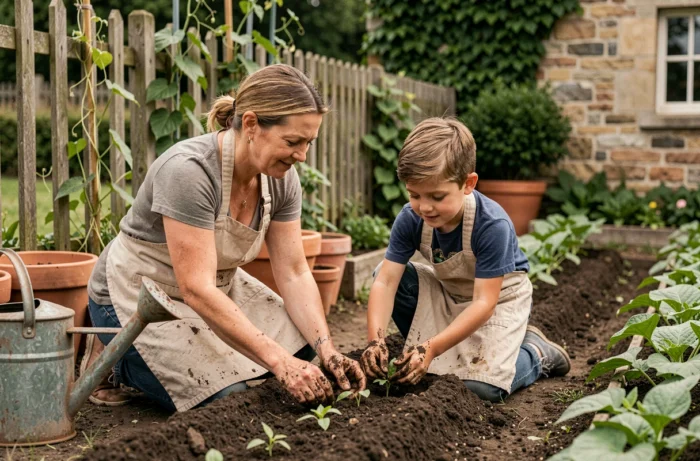
A family vegetable garden requires neither a car nor expensive equipment. Even a small patch of soil or a few containers on a terrace can let children follow a complete growing cycle. Children who plant radishes and harvest them three weeks later get a real sense of what seasonal produce means—better than they would from any documentary.
Night-time nature watching offers a different kind of experience. Stepping into the garden or a nearby field at dusk to listen for birds of prey, spot bats or simply gaze at the stars without a flashlight can turn a familiar setting into a place to explore. No equipment needed—just patience and quiet.
Free outdoor play: let boredom do its work
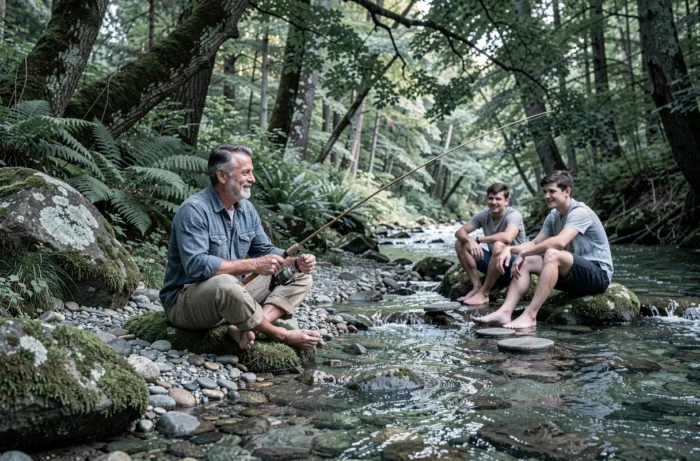
The temptation to plan every minute of a nature outing can sometimes have the opposite effect to the one intended. Letting children explore a stream, build a dam out of stones or climb on a fallen tree without specific instructions encourages a kind of learning that structured activities cannot replace.
A sloping field, a pile of fallen leaves in autumn, a muddy ditch in spring: the countryside offers a free playground that changes with every season. Parents need only check that the area is safe and resist the urge to organize everything.
Access to natural spaces: an overlooked barrier for families
The survey conducted in the Grenoble area highlights an issue rarely addressed in family activity guides. Barriers to accessing nature vary depending on household income and the mobility of family members. For a family without a car, a parent who uses a wheelchair or a child in a stroller, the choice of destination shrinks considerably unless the route’s accessibility is checked in advance.
Some rural municipalities have created trails accessible to all-terrain strollers and wheelchairs, with firm surfaces and gentle slopes. However, these facilities are unevenly distributed across the country.
- Check the trail surface (packed earth, compacted gravel or short grass) before setting out with a stroller or wheelchair
- Choose sites with parking close to the start of the walk to minimize the distance along the road
- Check whether there are drinking water points and restrooms, especially when travelling with young children
Travel time also matters. A nature outing that starts with an hour in the car with restless children loses some of its appeal. Looking for green spaces less than twenty minutes from home, even modest ones, often creates better memories than a long trip to a famous destination.
Reconnecting with nature as a family doesn’t require a spectacular destination or an elaborate itinerary. A nearby stretch of countryside, a free afternoon and a few precautions when choosing a location are all you need. The only thing worth planning is making sure the site really is accessible to everyone, including those who walk slowly or cannot walk at all.