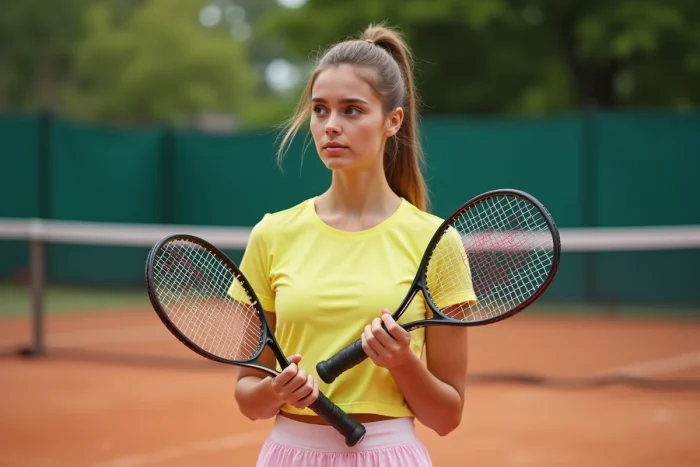
An entry-level model can have a weight similar to that of a professional racket, while using materials that are much less forgiving during the initial exchanges. Conversely, some ultra-light rackets, appealing on paper, dull the sensations and complicate learning by masking the feedback from strikes that develop touch.
No brand plays by the same rules, even among models labeled “beginner special.” Behind similar appearances, sometimes invisible technical choices weigh heavily on ease of handling and the pleasure of discovering tennis from the very first sessions.
First steps on the court: understanding what makes a good racket for beginners
The very first contact with a racket shapes the relationship with tennis. Faced with a multitude of models, beginners often find themselves overwhelmed by the promises of brands. However, there are specific criteria that make a difference. A tennis racket truly suited for beginners combines a weight that is reasonable, generally between 270 and 290 grams unstrung: just enough to ensure maneuverability and a bit of inertia during strikes. The head size, ideally between 645 and 680 cm², offers a forgiving hitting area that reassures during the first missed exchanges.
Take the time to examine the string pattern. A 16×19 pattern, which is more open, provides power and makes imperfect strikes less punishing. Conversely, the 18×20 pattern, which is tighter, is only useful at an advanced stage. The handle also matters: neither too thin nor too bulky, it should allow for a reliable grip without forcing. To delve deeper into this point, the following site details the criteria to consider for choosing a tennis racket for beginners.
To guide you among the essential choices, focus on the following characteristics:
- Weight: between 270 and 290 g, unstrung
- Head size: 645 to 680 cm² for maximum tolerance
- String pattern: 16×19, which facilitates power and tolerance
- Balance: between 32 and 33 cm, preferably slightly head-heavy
The question of grip quickly arises: an unsuitable handle can restrict the wrist and hinder technique. Opt for modern materials like graphite or carbon fiber, known for their shock absorption and lightness. At the beginning, the key is to prioritize tolerance and handling rather than dreaming of power or surgical control.
What criteria to look for to avoid common beginner mistakes?
Choosing your tennis racket well is not trivial. It is the starting point of your progress, and many fall into the trap of models inspired by pros without asking themselves if they are truly suitable. The first trap: weight. If it’s too heavy, fatigue sets in quickly, and the gesture deteriorates. If it’s too light, the racket loses stability, making it difficult to feel the ball. The reasonable range remains between 270 and 290 g unstrung.
Another element is the handle: its length and diameter affect comfort as well as protection against minor injuries. There are guides to choose the grip size according to your hand; take a few minutes to check. Regarding stringing, the 16×19 pattern remains your best ally as long as you are learning. A tighter pattern is reserved for advanced players seeking control above all.
The price should not dictate everything. Good entry-level models in graphite or carbon fiber offer superior comfort compared to aluminum. A slightly head-heavy balance helps send the ball deep into the court, while a neutral balance provides more responsiveness in fast play.
Keep these points in mind to avoid the most common mistakes:
- Weight consistent with your build
- Grip well adjusted to the hand
- 16×19 string pattern for more tolerance
- Slightly head-heavy or neutral balance, depending on your feelings

Brands, models, and good deals: where to find reliable advice (and connect with other beginners)
Starting with the right tennis racket also means benefiting from the experiences of others. Major brands like Head, Babolat, or Wilson offer models designed to facilitate learning. Among their references, the Head Instinct or the Drive Lite often stand out for their lightness and versatility noted in the first months of play. Online specs detail weight, balance, string pattern: study them calmly, as this helps clarify what will suit you on the court.
There are real goldmines of information on sports forums, support groups, or directly in customer feedback on major platforms. These exchanges provide valuable tips on choosing the grip, handle length, or maintenance. Testing several models at the club, thanks to loan sets, remains the best way to truly feel the difference from one racket to another.
As for specialized shops, whether local or online, they guarantee tailored advice. Guides and comparison charts are plentiful, as are trial opportunities before purchase in many clubs and sports stores.
In summary, orienting yourself requires a few key steps:
- Ask for the opinions of other beginners to compare feelings
- Try several rackets at the club to feel the real nuances
- Compare technical characteristics without haste
Ultimately, the perfect racket is the one you forget about to focus on each exchange. Gradually, confidence builds, the gesture frees up, and the pleasure of the game takes center stage, allowing technique to express itself naturally point by point.